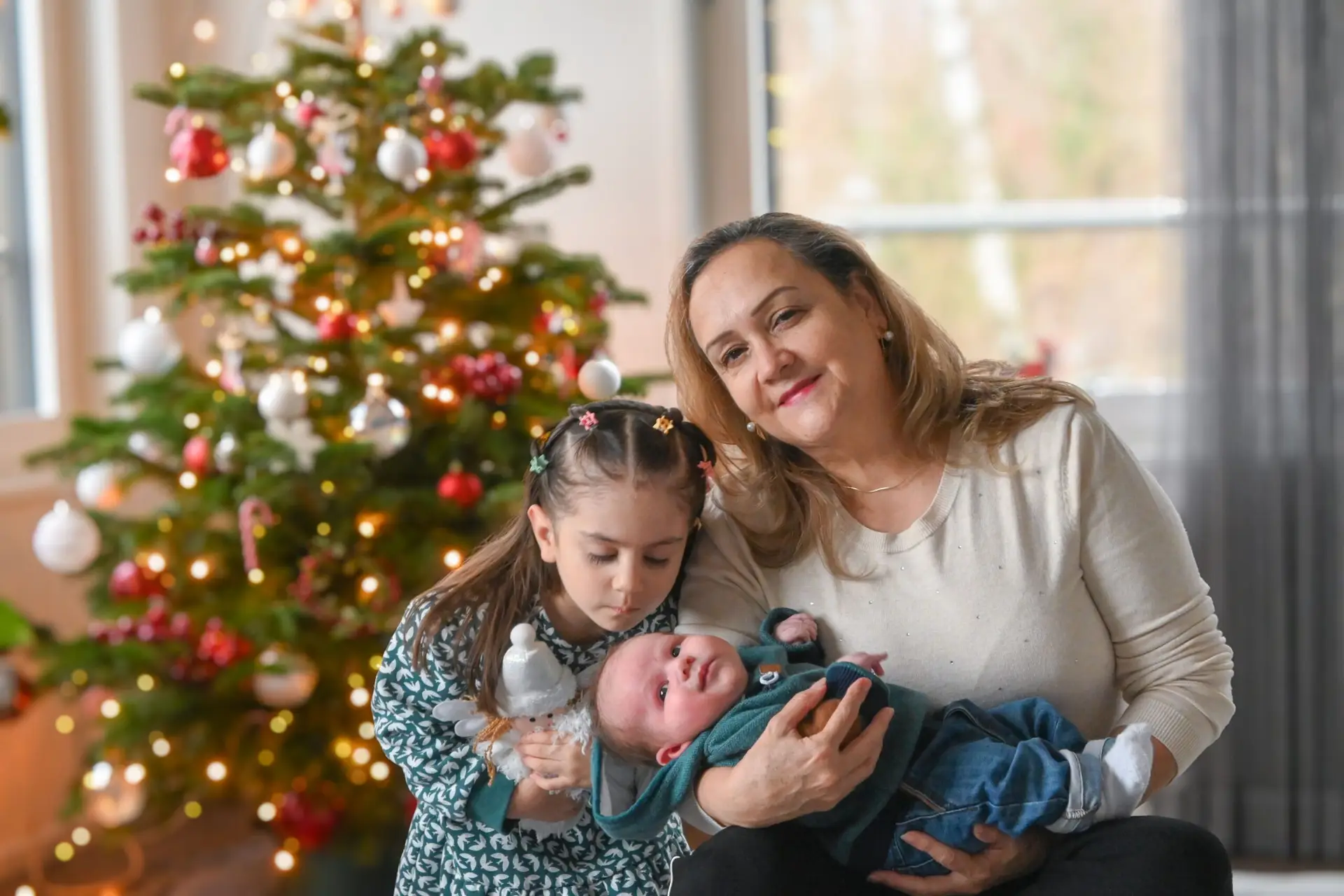
Some of the strongest childhood memories are surprisingly simple. Quality time with the Grandparents.
Baking something together. Hearing the same family story for the tenth time. Going for a walk. Playing a card game. Sitting next to Grandpa while he fixes something. Helping Grandma prepare a recipe she learned from her own mother.
The relationship between grandparents and grandchildren can bring together generations in a way few other family relationships can.
For many families in Zug, grandparents are also an important part of everyday family life. Some live around the corner and help with school pickups or afternoons with the children. Others live in another canton—or another country—and remain connected through holidays, visits, phone calls and video chats.
However the relationship looks, grandparents can offer something incredibly valuable: connection between a child’s present and their family’s past.
At Kiingle, we believe children benefit from growing up surrounded by a community of people who care about them. Grandparents can be a very special part of that village.
A Relationship That Connects Generations
Grandparents occupy a unique place in a family.
They are connected to their grandchildren through their parents, but they also bring their own experiences, memories and personalities into the relationship.
Research examining intergenerational relationships has found that warm and emotionally close relationships between grandparents and grandchildren can be associated with wellbeing for both generations. At the same time, researchers emphasize that family circumstances and the quality of the relationship matter.
That distinction is important.
It is not simply the title of “grandparent” that creates a meaningful relationship. It is what happens within it: spending time together, listening, sharing experiences and gradually getting to know one another.
Wisdom That Comes From Experience
Grandparents have something children cannot yet have: years of lived experience.
They have experienced successes and disappointments, changing friendships, family challenges, work, celebrations and enormous social changes.
That perspective can lead to some wonderful conversations.
A grandparent may be able to tell a child:
“I was nervous on my first day of school too.”
Or:
“I made plenty of mistakes when I was your age.”
Sometimes children do not need someone to solve a problem for them. They simply need someone who can listen and remind them that one difficult day is only one small chapter in a much bigger story.
And grandparents often have many chapters to share.
Family Stories Help Children Discover Their Roots
“Tell me what Mama was like when she was little.”
It might be one of the most entertaining questions a grandchild can ask.
Suddenly, parents become characters in stories involving muddy shoes, childhood mischief, old-fashioned clothes and adventures their children never imagined.
But these stories do more than make children laugh.
Grandparents can act as keepers of family history. Through conversations, photographs, recipes, traditions and memories, they can help children understand where their family came from.
For international families in Canton Zug, this connection can be particularly meaningful.
A child might be growing up in Switzerland while their grandparents live in Spain, Italy, Germany, Portugal, India, the United States or somewhere else entirely. Grandparents can help maintain a connection to another country, language or culture through stories and everyday traditions.
Family history does not have to be taught like a lesson.
Sometimes it is simply shared around the kitchen table.
Love, Connection and Emotional Support
Children benefit from having caring adults in their lives.
A supportive grandparent may become another trusted person a child can talk to, laugh with or turn to when something feels difficult.
Recent research examining grandparenting styles and children’s mental health suggests that positive grandparenting characteristics are associated with lower levels of some mental-health difficulties in children and adolescents, although researchers also caution that findings across studies are not uniform and do not prove that grandparent involvement alone causes better outcomes.
That nuance matters.
Grandparents do not need to be perfect or fulfil a specific role.
What often matters most is the relationship itself: interest, respect, reliability and genuine affection.
Sometimes one of the most meaningful things a grandparent can do is simply ask:
“Tell me what happened today.”
And then really listen to the answer.
Passing Down Traditions, Languages and Culture
Traditions rarely survive because somebody writes them in a manual.
They survive because people do them together.
A special Christmas recipe.
A song sung in another language.
A Sunday meal.
A family expression nobody else understands.
A holiday celebrated the same way every year.
A story that begins with, “When I was little…”
Grandparents can be an important link in keeping these traditions alive.
This can be especially valuable for multilingual and international families in Zug. Time with grandparents may give children opportunities to hear another language naturally, discover traditional foods, learn family customs and understand more about their cultural background.
And traditions do not have to be centuries old.
Grandparents and grandchildren can create new traditions together, too.
Every visit includes pancakes.
Saturday morning means walking to the playground.
Maybe they always choose a new book together.
Those small rituals can eventually become some of childhood’s biggest memories.
Grandparents Are Part of the Family Village
Parents hear the phrase “it takes a village to raise a child” all the time.
But creating that village in modern family life is not always easy.
Many parents are balancing work, childcare, appointments, school schedules, household responsibilities and everything else that comes with raising a family.
When grandparents are willing and able to be involved, their presence can become an important source of family support.
That might mean regular childcare.
But it could also mean something much smaller:
- collecting a grandchild from Kindergarten occasionally,
- staying with the children while parents attend an appointment,
- joining the family for dinner,
- going to the playground together,
- reading a bedtime story on FaceTime,
- or simply being someone parents can call.
Grandparents do not need to become additional parents.
Sometimes their most valuable role is simply being Grandma or Grandpa.
Quality Time With Grandparents Does Not Have to Be Complicated
Children rarely need an elaborate programme to enjoy time with their grandparents.
In fact, some of the easiest activities create the best opportunities to talk and connect.
Grandparents and grandchildren could:
- bake a family recipe together,
- look through old photographs,
- plant herbs or flowers,
- take a walk,
- visit a playground,
- draw or paint,
- read together,
- play cards or a board game,
- teach each other a skill,
- or prepare a favourite meal.
The activity is almost secondary.
What matters is having enough space for conversation, curiosity and shared attention.
Creating Memories Together
Families in Canton Zug have plenty of opportunities to make these simple moments happen.
A grandparent-grandchild afternoon might involve a walk by Zugersee, a picnic, a trip to a playground, a visit to a museum, time in the forest or joining one of the many local family activities taking place throughout the canton.
And this is something we love about our community.
An activity does not have to be spectacular to become meaningful.
Sometimes a child simply remembers:
“That was the place Grandpa always took me.”
Those associations between people, places and experiences are part of how family memories are built.
At Kiingle, our goal is to make finding those opportunities a little easier by bringing family-friendly activities and events in Canton Zug together in one place.
Every Family Relationship Looks Different
It is also important to recognise that there is no single ideal grandparent-grandchild relationship.
For example, some grandparents live nearby.
Others live thousands of kilometers away.
Some see their grandchildren every week, while others see them a few times each year.
Health, family dynamics, work, geography and personal circumstances can all influence how involved grandparents are able—or want—to be.
Research into grandparent caregiving reflects this complexity. A systematic review of 117 studies found that health and wellbeing outcomes for grandparents differed substantially depending on caregiving circumstances. Non-residential involvement was more often associated with positive outcomes, while grandparents who carried primary or intensive caregiving responsibilities were more likely to experience challenges. The researchers also cautioned that evidence for direct causation remains limited.
So this isn’t about measuring how often grandparents babysit or how many activities families do together.
Connection can take many forms.
A five-minute telephone call can matter.
A postcard can matter.
One special week together every summer can matter.
Ultimately, what matters is creating a relationship that works for the people involved.
A Legacy Made of Everyday Moments
The greatest things grandparents give their grandchildren are often impossible to wrap in a present.
A story.
A tradition.
A recipe.
A piece of advice.
A feeling of belonging.
A place where they know they are welcome.
In many ways, grandparents connect children to the generations that came before them, while also having the extraordinary opportunity to watch a new generation grow.
And somewhere between the family stories, afternoon walks, repeated jokes and ordinary days together, something very important is happening.
They are creating a family story that their grandchildren may one day tell their own children.
At Kiingle, we believe strong communities begin with connection—between children and parents, families and local businesses, neighbours and friends, and, of course, between generations.
After all, our children’s village is not only made up of the people raising them today.
It is also shaped by those who came before.
